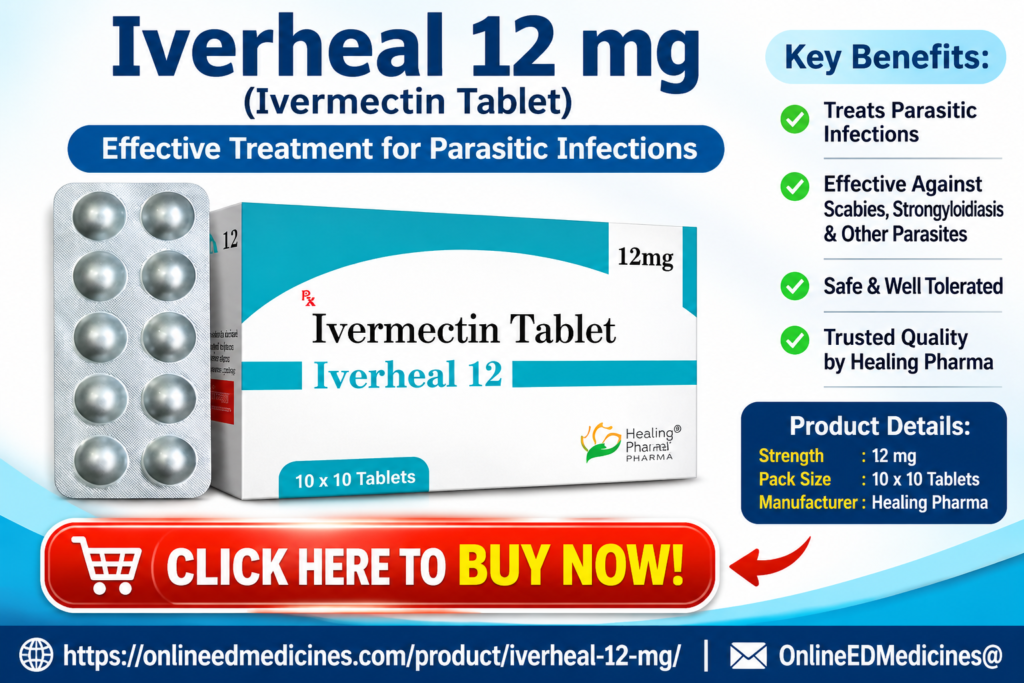
Iverheal 12mg is an antiparasitic medication that contains ivermectin as its active ingredient. It is used under medical supervision to treat certain parasitic infections affecting the intestines, skin, and other parts of the body. Like other medicines, Iverheal 12mg can cause side effects in some individuals. Understanding these possible reactions is important before starting treatment.
Although many people tolerate ivermectin well when it is prescribed appropriately, some may experience symptoms such as nausea, diarrhoea, dizziness, itching, or stomach discomfort. In certain situations, more serious reactions can occur and require immediate medical attention.
In this comprehensive guide, we will discuss Iverheal 12mg side effects, common and serious adverse reactions, precautions, potential drug interactions, and ways to use this medicine responsibly. This information can help patients understand what to expect and when to contact a healthcare professional.
What Is Iverheal 12mg?
Iverheal 12mg is an oral antiparasitic medicine containing 12mg of ivermectin. It belongs to a group of medications known as anthelmintics, which are used to treat certain infections caused by parasites.
Ivermectin works by interfering with the nerve and muscle functions of susceptible parasites. This action can paralyse and kill the parasites or prevent their normal survival, helping the body eliminate the infection.
Depending on the diagnosis and a healthcare professional’s recommendation, ivermectin may be prescribed for conditions such as:
- Intestinal strongyloidiasis.
- Onchocerciasis (river blindness).
- Certain cases of scabies.
- Other susceptible parasitic infections when medically appropriate.
The specific use depends on the patient’s medical condition and applicable treatment guidelines.
Iverheal 12mg should only be taken when prescribed by a qualified healthcare professional. The 12mg tablet strength does not mean that every patient requires the same amount of medication.
Common Iverheal 12mg Side Effects
Most side effects associated with ivermectin are mild or temporary. However, their severity can vary depending on the individual, the underlying infection, and the prescribed treatment.
Some commonly reported side effects include:
1. Nausea
Nausea is one of the possible gastrointestinal side effects of ivermectin. Some patients may experience an uncomfortable feeling in the stomach or a sensation of wanting to vomit after taking the medicine.
If nausea is persistent, severe, or accompanied by repeated vomiting, contact your doctor.
2. Diarrhoea
Diarrhoea may occur during ivermectin treatment. It can involve frequent loose or watery stools and sometimes abdominal discomfort.
Patients should maintain adequate fluid intake. Persistent diarrhoea, signs of dehydration, or severe abdominal symptoms require medical evaluation.
3. Dizziness
Some individuals may experience dizziness or light-headedness after taking Iverheal 12mg.
Patients experiencing dizziness should avoid driving, operating machinery, or performing activities requiring concentration until they feel completely normal.
4. Vomiting
Vomiting is another possible adverse reaction. It may occur alongside nausea or stomach discomfort.
Repeated vomiting can cause dehydration and may require medical attention. Do not automatically repeat a dose if vomiting occurs after taking the medicine. Ask your healthcare professional what to do.
5. Stomach Pain or Discomfort
Abdominal pain, bloating, and stomach discomfort have been reported in some patients.
These symptoms may be mild, but persistent or severe abdominal pain should not be ignored.
6. Itching
Itching, medically known as pruritus, can occur during ivermectin treatment.
In some parasitic infections, itching may also be associated with the body’s inflammatory response to dying parasites. However, widespread itching accompanied by hives, facial swelling, or breathing difficulties may indicate an allergic reaction.
7. Fatigue and Weakness
Some patients may experience tiredness, weakness, or a general feeling of reduced energy.
Rest and adequate hydration may help with mild symptoms. However, unusual or significant weakness should be discussed with a healthcare professional.
8. Constipation
Constipation is another possible gastrointestinal reaction. It may involve difficulty passing stools or less frequent bowel movements.
If constipation becomes persistent or is associated with severe abdominal pain, seek medical advice.
These side effects do not occur in everyone. Their presence and severity can differ between patients.
Serious Side Effects of Iverheal 12mg
Although serious reactions are less common, patients should understand the warning signs that require prompt medical attention.
1. Severe Allergic Reactions
An allergic reaction to ivermectin may cause:
- Severe skin itching.
- Hives or widespread rash.
- Swelling of the face, lips, tongue, or throat.
- Difficulty breathing.
- Sudden weakness or fainting.
Severe allergic reactions can be life-threatening. Seek emergency medical assistance if these symptoms occur.
2. Severe Skin Reactions
In rare cases, ivermectin has been associated with serious skin reactions.
Warning signs may include:
- Blistering of the skin.
- Skin peeling.
- Painful or widespread rash.
- Sores affecting the mouth or eyes.
These symptoms require immediate medical evaluation.
3. Neurological Problems
Excessive exposure to ivermectin or certain serious reactions may affect the nervous system.
Potential warning signs include:
- Severe dizziness.
- Confusion or disorientation.
- Unusual sleepiness.
- Loss of coordination.
- Tremors.
- Seizures.
- Reduced consciousness.
If any of these symptoms develop, seek urgent medical care.
4. Low Blood Pressure
Some patients may experience low blood pressure, particularly when standing up from a sitting or lying position.
Symptoms can include light-headedness, dizziness, or fainting. Stand up slowly and inform your doctor if these symptoms occur.
5. Liver-Related Problems
Liver-related adverse reactions, including increased liver enzyme levels and hepatitis, have been reported with ivermectin.
Unusual yellowing of the skin or eyes, dark urine, or persistent unexplained abdominal discomfort should be medically evaluated.
Side Effects Related to the Treatment of Parasitic Infections
An important point about Iverheal 12mg is that some reactions may result from the body’s response to dying parasites rather than directly from the medicine itself.
For example, when ivermectin is used to treat onchocerciasis, patients may experience an inflammatory response known as a Mazzotti-type reaction.
Possible symptoms include:
- Fever.
- Itching.
- Skin rash.
- Muscle pain.
- Joint pain.
- Swollen lymph nodes.
- Facial or peripheral swelling.
- Rapid heartbeat.
- Dizziness.
These reactions can vary in severity depending on the underlying infection and parasite burden.
Patients should report significant or worsening symptoms to their healthcare provider.
Factors That May Increase the Risk of Side Effects
Not everyone experiences the same response to Iverheal 12mg. Certain factors may influence the likelihood or severity of adverse reactions.
1. Incorrect Dosage
Taking more ivermectin than prescribed can increase the risk of unwanted reactions and toxicity.
The appropriate dose depends on factors such as body weight, infection type, and medical history.
Never increase, repeat, or change your prescribed dose without medical advice.
2. Existing Medical Conditions
Patients with certain medical conditions may require additional assessment before taking ivermectin.
Inform your doctor about any existing health problems, particularly conditions affecting the immune system, liver, or nervous system.
3. Other Medications
Taking ivermectin alongside other medicines may require additional monitoring.
Always provide your healthcare professional with a complete list of prescription medicines, over-the-counter products, vitamins, and supplements.
4. Age and Body Weight
Age and body weight can influence treatment decisions.
The safety and effectiveness of ivermectin tablets have not been established for children weighing less than 15kg in the relevant product information. Children should never receive this medicine without appropriate medical assessment.
Precautions Before Taking Iverheal 12mg
Following appropriate precautions can help reduce avoidable risks associated with ivermectin treatment.
Consider the following points:
Pregnancy: Inform your doctor if you are pregnant, planning pregnancy, or think you may be pregnant. Ivermectin should only be considered after an appropriate assessment of potential benefits and risks.
Breastfeeding: Consult your healthcare professional before using Iverheal 12mg while breastfeeding.
Liver conditions: Tell your doctor if you have a history of liver problems or abnormal liver function.
Allergies: Do not take this medicine if you have a known allergy to ivermectin or any of its ingredients unless a specialist has specifically evaluated the situation.
Other medications: Disclose all medicines and supplements you currently use to help identify potential interactions.
Loa loa infection: Patients who have lived in or travelled to areas where Loa loa infection occurs should inform their doctor. Ivermectin treatment in people with certain Loa loa infections can cause severe neurological complications.
Alcohol: Discuss alcohol consumption with your healthcare professional, particularly if you experience dizziness or other symptoms during treatment.
How to Reduce the Risk of Iverheal 12mg Side Effects
Although side effects cannot always be prevented, responsible medicine use can help minimise avoidable problems.
Follow these recommendations:
- Take Iverheal 12mg only when prescribed by a qualified healthcare professional.
- Follow the prescribed dose and treatment instructions.
- Do not take additional tablets without medical advice.
- Inform your doctor about allergies and existing medical conditions.
- Discuss all other medicines and supplements you use.
- Avoid driving if you experience dizziness or sleepiness.
- Maintain adequate hydration, especially if diarrhoea or vomiting occurs.
- Seek medical attention if symptoms become severe or persistent.
- Keep the medicine away from children and store it according to the packaging instructions.
Remember that taking a higher dose does not necessarily produce better treatment results. Correct medical supervision is essential.
What Should You Do If You Experience Side Effects?
Your response should depend on the type and severity of the symptoms.
For mild symptoms: Mild nausea, temporary stomach discomfort, or slight dizziness should be monitored. Contact your doctor if symptoms persist or worsen.
For persistent symptoms: If diarrhoea, vomiting, itching, or weakness continues, consult your healthcare professional for further evaluation.
For serious symptoms: Stop taking further doses until you receive medical advice and seek urgent medical attention if you experience a severe rash, facial swelling, breathing difficulties, confusion, seizures, or loss of consciousness.
Do not attempt to manage serious medication reactions through self-medication.
Frequently Asked Questions About Iverheal 12mg Side Effects
1. What are the most common side effects of Iverheal 12mg?
Commonly reported side effects include nausea, diarrhoea, vomiting, dizziness, itching, abdominal discomfort, and weakness. Not everyone experiences these reactions.
2. Does Iverheal 12mg cause dizziness?
Yes. Dizziness and light-headedness are possible side effects of ivermectin. Avoid driving or operating machinery if you experience these symptoms.
3. Can Iverheal 12mg cause stomach problems?
Yes. Some patients may experience nausea, vomiting, diarrhoea, constipation, bloating, or abdominal pain.
4. Are Iverheal 12mg side effects permanent?
Most reported side effects are temporary. However, serious adverse reactions may require medical treatment. Consult a doctor if symptoms persist or become worse.
5. Can I take Iverheal 12mg without a prescription?
No. Iverheal 12mg should only be used under the guidance of a qualified healthcare professional. Self-medication can lead to inappropriate dosing and avoidable health risks.
6. Can Iverheal 12mg cause an allergic reaction?
Yes. Although uncommon, allergic reactions can occur. Hives, facial swelling, difficulty breathing, and severe skin reactions require immediate medical attention.
7. Is Iverheal 12mg safe during pregnancy?
Ivermectin use during pregnancy requires careful medical assessment. Pregnant women should not use Iverheal 12mg without consulting their healthcare provider.
8. What happens if I take more Iverheal 12mg than prescribed?
An excessive dose may cause serious adverse effects, including nausea, vomiting, diarrhoea, dizziness, weakness, impaired coordination, seizures, and other neurological symptoms. Seek immediate medical assistance if an overdose is suspected.
Conclusion
Iverheal 12mg is an ivermectin-based antiparasitic medicine used to manage certain parasitic infections under medical supervision. While many patients tolerate it without major problems, possible Iverheal 12mg side effects include nausea, diarrhoea, vomiting, dizziness, itching, and abdominal discomfort.
More serious reactions, such as severe allergic responses, skin complications, neurological symptoms, and liver-related problems, are also important to recognise.
The safest approach is to use Iverheal 12mg only as prescribed, follow professional medical advice, and report unusual or persistent symptoms promptly. Understanding the possible side effects helps patients make informed decisions and use medication more responsibly.
Medical Disclaimer: This article is intended for educational and informational purposes only. It does not replace professional medical advice, diagnosis, or treatment. Iverheal 12mg should only be used under the supervision of a qualified healthcare professional.