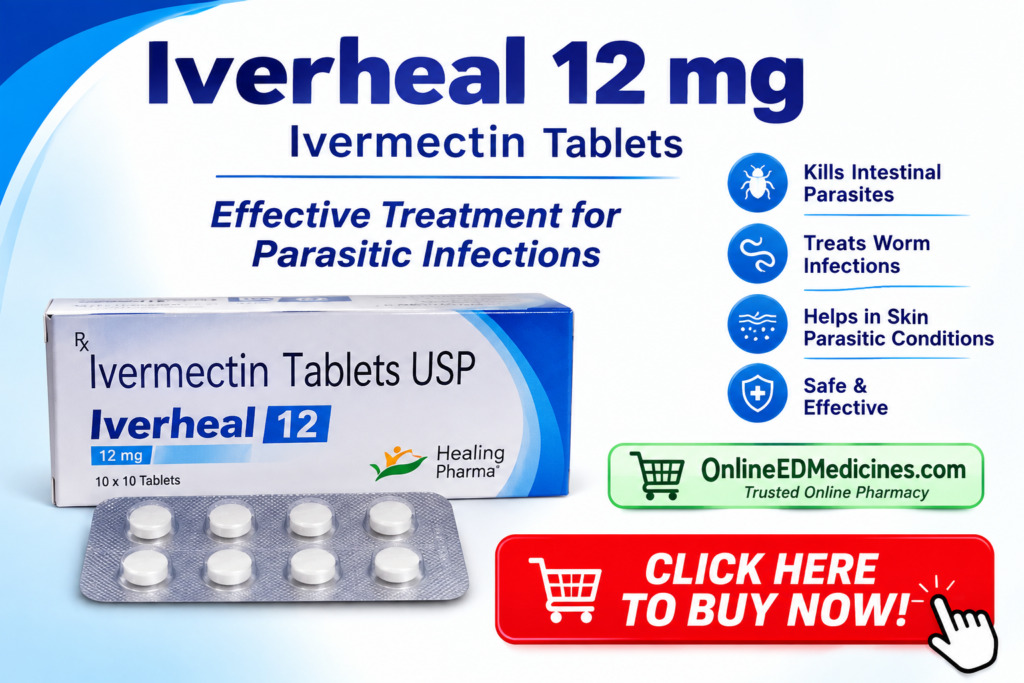
Iverheal 12 mg: Uses, Benefits, Dosage, Side Effects, and Precautions
Introduction
Iverheal 12 mg medicine is an oral antiparasitic medication containing ivermectin as its active ingredient. It is used under medical supervision to treat certain parasitic infections. Understanding its uses, benefits, dosage considerations, possible side effects, and safety precautions can help patients make informed decisions about their treatment.
Ivermectin works by affecting the nerve and muscle functions of susceptible parasites, helping to paralyze and eliminate them. However, it is not effective against every type of parasite, and the appropriate treatment depends on the specific infection diagnosed by a healthcare professional.
In this guide, we explore what Iverheal 12 mg is, how it works, its medical uses, and the important precautions to consider before taking it.
What Is Iverheal 12 mg Medicine?
Iverheal 12 mg is a tablet containing 12 milligrams of ivermectin. Ivermectin belongs to a class of medicines known as antiparasitic agents or anthelmintics.
Doctors prescribe ivermectin for particular parasitic infections, including intestinal strongyloidiasis and onchocerciasis. Depending on the diagnosis and local treatment guidelines, it may also be prescribed for certain other conditions, such as scabies.
The correct treatment schedule varies according to the infection, the patient’s body weight, medical history, and other individual factors.
Key Information About Iverheal 12 mg
- Brand name: Iverheal 12 mg
- Active ingredient: Ivermectin
- Strength: 12 mg per tablet
- Medicine category: Antiparasitic medication
- Dosage form: Oral tablet
- Primary purpose: Treatment of selected parasitic infections
- Use: As directed by a qualified healthcare professional
Always check the medicine packaging and patient information leaflet to confirm the formulation and manufacturer.
What Is Iverheal 12 mg Used For?
The uses of Iverheal 12 mg depend on the infection being treated. Ivermectin has established medical uses for certain parasitic diseases.
1. Treatment of Strongyloidiasis
Strongyloidiasis is an intestinal infection caused by the parasitic roundworm Strongyloides stercoralis. The infection can cause abdominal discomfort, diarrhea, skin symptoms, and other digestive problems, although some infected individuals have few or no symptoms.
Ivermectin is an established treatment for intestinal strongyloidiasis. It acts against susceptible parasites and helps the body clear the infection.
Follow-up testing may be necessary to determine whether the infection has been successfully eliminated, particularly when symptoms persist or the patient has an increased risk of complications.
2. Treatment of Onchocerciasis
Onchocerciasis, also called river blindness, is a parasitic disease caused by Onchocerca volvulus. It is transmitted through the bites of infected blackflies.
The disease can cause intense itching, skin changes, and potentially serious eye complications.
Ivermectin helps reduce the number of immature parasites responsible for many symptoms and complications. However, it does not kill the adult worms, so follow-up treatment and monitoring may be required.
Treatment of this condition should be managed by a healthcare professional familiar with the disease and its potential complications.
3. Treatment of Scabies in Selected Cases
Scabies is a contagious skin infestation caused by the microscopic mite Sarcoptes scabiei. Common symptoms include severe itching, particularly at night, and a rash that may appear between the fingers, around the wrists, or in other areas of the body.
Oral ivermectin may be prescribed for certain cases of scabies, depending on clinical circumstances and applicable guidelines.
However, not every itchy rash is caused by scabies. Other conditions, including eczema, allergic reactions, and fungal infections, can produce similar symptoms. A correct diagnosis is important before treatment.
A healthcare professional can determine whether oral ivermectin, a topical treatment, or another approach is appropriate.
4. Other Parasitic Conditions
Ivermectin may be used for selected additional parasitic conditions under professional guidance. Its suitability depends on the parasite involved, the available evidence, and the patient’s circumstances.
It should not be assumed that Iverheal 12 mg treats every worm infection, skin infestation, or unexplained itching problem.
How Does Iverheal 12 mg Work?
Iverheal 12 mg contains ivermectin, which interferes with certain nerve and muscle functions in susceptible parasites.
The medicine interacts with specific chloride channels in parasite cells. This disrupts normal nerve signaling and muscle activity, causing paralysis and, ultimately, the elimination or reduction of susceptible parasites.
Human cells differ from parasites in important ways, which helps explain ivermectin’s selective activity when it is used appropriately.
The medicine’s effectiveness depends on several factors, including:
- The type of parasite causing the infection.
- The severity and location of the infection.
- The prescribed dose and treatment schedule.
- The patient’s body weight and general health.
- Whether additional treatment or follow-up is required.
Taking more medicine than prescribed does not necessarily improve effectiveness and can increase the risk of harmful effects.
Benefits of Iverheal 12 mg Medicine
When prescribed for an appropriate condition, ivermectin offers several potential therapeutic benefits.
Targets Susceptible Parasites
Ivermectin acts against particular parasites responsible for human infections. Successful treatment can help eliminate or reduce the parasite burden.
Supports Recovery From Parasitic Infections
By controlling the infection, treatment may help relieve related symptoms, depending on the disease and its severity.
Oral Administration
Iverheal is supplied as an oral tablet, making administration convenient for patients who have been prescribed this formulation.
Established Medical Use
Ivermectin has been used for decades to treat certain parasitic diseases. Its benefits and risks are well documented for approved indications.
Important: These benefits apply only when ivermectin is appropriate for the diagnosed condition. It is not a general-purpose medicine for all infections.
Iverheal 12 mg Dosage: What Should You Know?
The correct Iverheal 12 mg dosage must be determined by a qualified healthcare professional.
Although the tablet contains 12 mg of ivermectin, that strength does not mean every patient should take one tablet or that the same schedule applies to every infection.
Ivermectin dosing is commonly based on body weight and the condition being treated. Some infections may require a single dose, while others may need repeat treatment or additional monitoring.
Before prescribing the medicine, a healthcare professional may consider:
- The patient’s body weight and age.
- The type and severity of the infection.
- Pregnancy or breastfeeding status.
- Other medical conditions.
- Current prescription medicines and supplements.
- Previous reactions to ivermectin or similar medicines.
How Should Iverheal 12 mg Be Taken?
Follow the instructions provided with your prescription. Product-specific directions may differ, so check the patient leaflet and ask your pharmacist if you are uncertain about food timing or administration.
Do not increase the dose, repeat a dose early, or extend treatment without medical advice. If you miss a dose, ask your healthcare professional what to do rather than taking extra tablets.
If symptoms continue after treatment, seek medical advice instead of automatically repeating the medicine.
Possible Side Effects of Iverheal 12 mg
Like other medicines, ivermectin can cause side effects. Their likelihood and severity depend on the patient, the infection being treated, and other clinical factors.
Commonly Reported Side Effects
Possible side effects include:
- Nausea.
- Diarrhea.
- Abdominal discomfort.
- Dizziness.
- Fatigue.
- Headache.
- Itching or skin rash.
Not everyone experiences these effects. Some symptoms may also result from the underlying infection or the body’s response to treatment.
Serious Side Effects
Seek urgent medical attention if you experience severe or unexpected symptoms, including:
- Difficulty breathing or swelling of the face, lips, or tongue.
- Severe confusion or unusual drowsiness.
- Fainting or loss of consciousness.
- Seizures or difficulty walking.
- Severe skin reactions, including blistering or peeling.
Rare neurological complications have been reported with ivermectin. People being treated for particular parasitic diseases may also experience inflammatory reactions associated with the destruction of parasites.
Do not ignore severe symptoms or assume they are a normal part of recovery.
Precautions Before Taking Iverheal 12 mg
Before starting treatment, tell your healthcare professional about your medical history and all medicines you take.
Pregnancy and Breastfeeding
If you are pregnant, planning pregnancy, or breastfeeding, discuss the potential benefits and risks with your healthcare professional. The decision to use ivermectin should be based on the specific medical need and available clinical guidance.
Liver Problems and Other Medical Conditions
Inform your doctor about significant liver disease, immune-system conditions, or other ongoing health concerns. Your overall health may influence treatment decisions and monitoring.
Allergies
Do not take the medicine if you have a known allergy to ivermectin or another ingredient in the product unless a qualified healthcare professional has specifically evaluated the situation.
Drug Interactions
Tell your doctor or pharmacist about prescription medicines, over-the-counter products, vitamins, and herbal supplements. Ivermectin may interact with other medicines, and rare reports describe changes in the blood-thinning effect of warfarin.
Children and Older Adults
The suitability and dosage of ivermectin for children depend on age, weight, and the condition being treated. Older adults may also require individualized assessment based on their health and other medicines.
Do not give an adult-strength tablet to a child without explicit medical instructions.
Who Should Avoid Self-Medicating With Iverheal 12 mg?
Self-medication can delay the correct diagnosis or lead to unnecessary exposure to medication.
Avoid taking Iverheal 12 mg without professional advice if:
- You are unsure whether your symptoms are caused by parasites.
- You have unexplained itching or a persistent skin rash.
- You are pregnant or breastfeeding.
- You have a history of serious medicine allergies.
- You take multiple prescription medicines.
- You have already taken ivermectin and are considering another dose.
- You are considering veterinary ivermectin products.
Veterinary formulations are not intended for human use and can contain inappropriate concentrations or ingredients.
Ivermectin should also not be used as a substitute for proven treatments for viral illnesses unless a qualified professional identifies a separate, appropriate indication.
Can Iverheal 12 mg Be Used for COVID-19?
Ivermectin is not an established treatment for COVID-19. Evidence has not demonstrated a reliable benefit sufficient to recommend routine use for preventing or treating the disease.
Do not use Iverheal 12 mg for COVID-19 unless a healthcare professional identifies another legitimate medical indication for ivermectin.
Using higher doses or products intended for animals can cause serious harm.
Storage and Handling
Proper storage helps maintain the medicine’s quality.
- Follow the storage conditions printed on the packaging.
- Keep tablets in their original packaging when appropriate.
- Protect the medicine from excessive heat and moisture.
- Store it out of the reach of children.
- Do not use expired or damaged tablets.
Ask a pharmacist how to dispose of unused medicine safely.
Frequently Asked Questions About Iverheal 12 mg
1. What is Iverheal 12 mg used for?
Iverheal 12 mg contains ivermectin, an antiparasitic medicine used for certain parasitic infections. Its suitability depends on the specific diagnosis and the healthcare professional’s assessment.
2. Is Iverheal 12 mg an antibiotic?
No. Ivermectin is an antiparasitic medicine, not an antibiotic. Antibiotics target susceptible bacteria, while ivermectin acts against particular parasites.
3. How quickly does Iverheal 12 mg work?
The response depends on the infection, the prescribed regimen, and individual factors. Symptom improvement does not always mean that the infection has been completely eliminated. Follow your clinician’s advice about follow-up testing.
4. Can I take Iverheal 12 mg without a prescription?
You should use ivermectin under appropriate medical guidance. A healthcare professional can confirm the diagnosis, determine the correct dose, and assess possible interactions and contraindications.
5. Does Iverheal 12 mg treat scabies?
Oral ivermectin may be prescribed for selected cases of scabies. The treatment plan depends on the clinical situation and applicable guidelines. Other measures, including treatment of close contacts and environmental precautions, may be necessary.
6. Can I repeat the dose if itching continues?
Do not repeat the dose automatically. Itching can persist after successful scabies treatment, and continued symptoms can also indicate reinfestation, incorrect diagnosis, or another skin condition. Seek professional advice before taking more medicine.
7. What should I do if I experience side effects?
Contact your healthcare professional for advice about mild or persistent symptoms. Seek emergency medical attention for breathing difficulties, facial swelling, severe confusion, seizures, loss of consciousness, or other serious reactions.
Conclusion
Iverheal 12 mg medicine is an oral formulation of ivermectin used under medical supervision to treat selected parasitic infections. Its established uses include intestinal strongyloidiasis and onchocerciasis, while oral ivermectin may also be prescribed for certain other conditions in appropriate circumstances.
Understanding the medicine’s uses, possible side effects, dosage considerations, and precautions can help patients use it more safely. The 12 mg tablet strength alone does not determine the correct dose for every individual or infection.
Always obtain professional medical advice before starting treatment, follow the prescribed instructions, and seek further evaluation if symptoms persist or serious side effects develop.
Medical References
- DailyMed, US National Library of Medicine: Ivermectin tablet prescribing information — https://dailymed.nlm.nih.gov/dailymed/
- MedlinePlus, US National Library of Medicine: Ivermectin drug information — https://medlineplus.gov/druginfo/meds/a607069.html
Medical disclaimer: This article is for educational and informational purposes only. It is not a substitute for professional medical advice, diagnosis, or treatment.