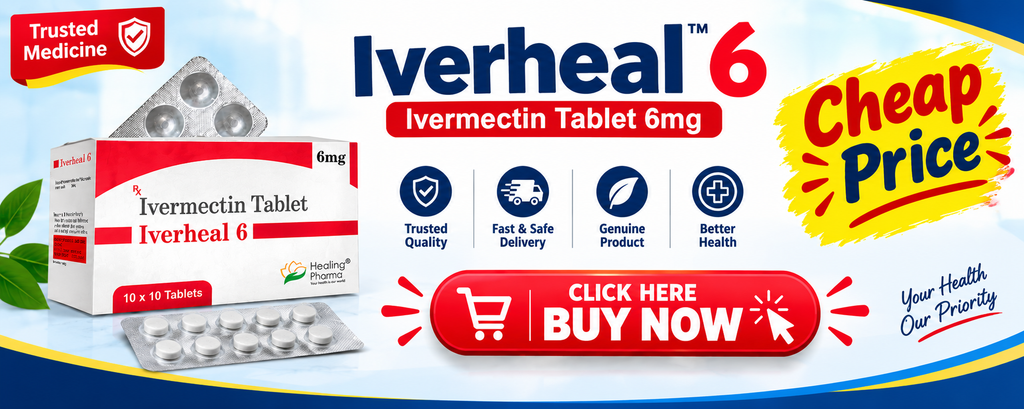
Iverheal 6 is a tablet commonly associated with ivermectin, an antiparasitic medicine used to treat certain infections caused by parasites. Healthcare professionals may prescribe ivermectin for specific parasitic conditions after assessing a patient’s symptoms, medical history, and the type of infection.
Understanding Iverheal 6 tablet uses is important before starting treatment. Although ivermectin can be effective against susceptible parasites, it is not suitable for every infection or skin problem. The correct treatment depends on the diagnosis, body weight, age, medical history, and prescribing instructions.
In this guide, we explain the potential uses of Iverheal 6, how ivermectin works, how to take it safely, its possible side effects, and answers to common questions.
Important: This article provides general educational information. Confirm the active ingredient and strength on your medicine packaging, and use the tablet only under appropriate medical guidance.
What Is Iverheal 6 Tablet?
Iverheal 6 is a medicine brand associated with ivermectin 6 mg tablets. Ivermectin belongs to a group of medicines known as antiparasitic agents.
Antiparasitic medicines are used against particular organisms that can infect the human body. Depending on the diagnosis, ivermectin may be prescribed for certain intestinal worm infections and other susceptible parasitic conditions.
The exact indication depends on local prescribing guidance and the clinician’s assessment. Not every condition caused by itching, rashes, or digestive symptoms requires ivermectin.
Before using Iverheal 6, check the product label to verify its composition, strength, manufacturer, and instructions.
Main Iverheal 6 Tablet Uses
The primary purpose of oral ivermectin is to treat certain parasitic infections. Its established uses include the following conditions.
1. Treatment of Strongyloidiasis
Strongyloidiasis is an intestinal infection caused by the parasitic roundworm Strongyloides stercoralis. The infection may cause abdominal discomfort, diarrhoea, skin symptoms, or other problems, although some people have few noticeable symptoms.
Ivermectin is an established treatment for this infection. A healthcare professional determines the appropriate regimen based on the patient’s circumstances and the relevant clinical guidance.
People with weakened immune systems may be at increased risk of severe disease. Persistent or unexplained symptoms should therefore be medically assessed rather than treated through self-medication.
2. Treatment of Onchocerciasis
Onchocerciasis, also known as river blindness, is a parasitic disease caused by Onchocerca volvulus. It can affect the skin and eyes and, in severe cases, lead to visual impairment.
Ivermectin helps control this infection by affecting susceptible developing parasites. However, treatment does not simply eliminate every adult parasite, and ongoing medical supervision may be required.
This condition is associated with particular geographic regions and exposure risks. Treatment decisions should be made by qualified healthcare professionals.
3. Treatment of Certain Other Parasitic Infections
Depending on the clinical situation and applicable treatment guidelines, ivermectin may also be used for selected other parasitic infections.
Examples include certain roundworm infections. Whether ivermectin is appropriate depends on the specific organism involved and the available evidence for treatment.
Different parasitic diseases may require different medicines. Therefore, a tablet should not be used simply because someone suspects they have worms.
4. Treatment of Scabies in Selected Cases
Scabies is a contagious skin infestation caused by tiny mites. Typical symptoms include intense itching, particularly at night, and small bumps or lines on the skin.
Oral ivermectin may be prescribed for scabies in selected circumstances, such as certain difficult-to-treat cases, outbreaks, or situations where a clinician considers oral treatment appropriate.
However, oral ivermectin is not automatically the first choice for every patient with scabies. Treatment recommendations vary according to age, pregnancy status, clinical circumstances, and local guidance.
Successful treatment may also require managing close contacts and washing recently used clothing, towels, and bedding according to healthcare advice.
5. Treatment of Certain Lice Infestations
Ivermectin is used in some circumstances to treat lice infestations. However, the formulation matters: evidence and instructions for topical ivermectin products cannot automatically be applied to oral tablets.
A clinician should determine whether oral ivermectin is appropriate or whether a different treatment is preferable.
Important Clarification About Skin Problems
Iverheal 6 is not a general-purpose treatment for every itchy rash, acne outbreak, fungal infection, or allergic reaction. Similar symptoms can have very different causes.
Correct diagnosis is important because the wrong medicine may delay effective treatment or cause unnecessary side effects.
How Does Iverheal 6 Work?
Iverheal 6 works through its active ingredient, ivermectin, when the product contains the stated ingredient.
Ivermectin interferes with specific nerve and muscle functions in susceptible parasites. This can cause paralysis and help control or eliminate the targeted organisms.
The medicine’s activity is directed at susceptible parasites rather than all microorganisms. It is not a general antibiotic and does not treat every bacterial, viral, or fungal infection.
The outcome depends on the type of parasite, the severity of the infection, the prescribed regimen, and the patient’s individual circumstances.
How to Take Iverheal 6 Tablet
Iverheal 6 should be taken according to the instructions provided by a qualified healthcare professional.
Keep the following points in mind:
- Follow the prescribed dose: Do not calculate a dose from the tablet strength alone.
- Check the administration instructions: The recommended way to take ivermectin may depend on the condition being treated and the applicable product guidance.
- Do not repeat doses independently: Some conditions require a single dose, while others may require additional treatment or follow-up.
- Avoid doubling a missed dose: Contact your healthcare professional for advice if you miss a prescribed dose.
- Attend follow-up appointments: Certain infections require testing or clinical review to confirm that treatment has worked.
The appropriate dose may depend on body weight, the infection being treated, age, other medical conditions, and the treatment protocol. A 6 mg tablet is a strength, not a universal dose for every patient.
Possible Side Effects of Iverheal 6
Like other medicines, ivermectin may cause side effects. Their likelihood and severity depend on the individual and the condition being treated.
Common or Less Serious Side Effects
Possible side effects include:
- Nausea
- Diarrhoea
- Vomiting
- Abdominal discomfort
- Dizziness
- Weakness or fatigue
- Reduced appetite
Some symptoms may also be related to the underlying infection or the body’s response to treatment.
If symptoms persist, become troublesome, or worsen, contact a healthcare professional.
Serious Side Effects
Seek urgent medical attention if you experience symptoms such as:
- Severe rash, blistering, or peeling skin
- Swelling of the face, lips, or tongue
- Difficulty breathing
- Severe confusion or unusual drowsiness
- Seizures or significant difficulty walking
- Serious visual or neurological symptoms
Do not ignore a suspected severe allergic reaction or signs of a serious adverse effect.
Precautions Before Using Iverheal 6
Before taking Iverheal 6, discuss your medical history with your doctor or pharmacist.
Pregnancy and Breastfeeding
If you are pregnant, planning pregnancy, or breastfeeding, seek professional advice before taking ivermectin. The decision should consider the potential benefits, risks, and available alternatives.
Liver Problems and Other Medical Conditions
Tell your healthcare professional about significant medical conditions, allergies, and any previous reactions to ivermectin.
People with certain health conditions may require additional assessment or monitoring.
Other Medicines
Provide a complete list of your prescription medicines, non-prescription products, supplements, and herbal remedies. Some medicines may interact with ivermectin or affect the appropriate treatment plan.
Children and Older Adults
The suitability and dose of ivermectin can vary with age and body weight. Children should receive treatment only under appropriate medical supervision. Older adults may also need an individualized assessment.
Avoid Veterinary Products
Never use ivermectin products intended for animals as substitutes for human medication. Veterinary formulations may have different concentrations and are not evaluated for human use in the same way.
Is Iverheal 6 Effective for COVID-19?
Ivermectin should not be taken for COVID-19 unless it is being used in a properly authorized clinical context. Evidence has not established routine ivermectin use as an effective treatment for preventing or treating COVID-19.
A medicine’s effectiveness against certain parasites does not mean it is effective against viruses.
Always follow current public-health recommendations and consult a qualified healthcare professional about appropriate treatment for respiratory infections.
Storage and Handling
Store Iverheal 6 according to the instructions on its packaging. Keep it in its original container, away from excessive heat and moisture, and out of the reach of children.
Do not use tablets beyond their expiry date. Ask a pharmacist how to dispose of unused medicine safely.
Frequently Asked Questions About Iverheal 6 Tablet Uses
1. What is Iverheal 6 tablet used for?
Iverheal 6 is associated with ivermectin, an antiparasitic medicine used for certain parasitic infections. Depending on clinical guidance, ivermectin may also be prescribed for selected cases of scabies or lice infestation.
2. Is Iverheal 6 an antibiotic?
No. Ivermectin is an antiparasitic medicine, not a conventional antibiotic. It targets susceptible parasites and is not intended to treat ordinary bacterial infections.
3. Can I take Iverheal 6 for itching?
Not every type of itching is caused by parasites. Allergies, eczema, fungal infections, scabies, and other conditions can cause similar symptoms. Obtain a diagnosis before using ivermectin.
4. How long does Iverheal 6 take to work?
The time required for improvement varies according to the condition being treated and the patient’s response. Some symptoms may persist temporarily even after appropriate treatment. Seek medical advice if symptoms worsen or fail to improve as expected.
5. Can I take Iverheal 6 without a prescription?
Self-medication is not recommended. A healthcare professional should establish whether ivermectin is appropriate, determine the dose, and assess potential risks and interactions.
6. What are the common side effects of Iverheal 6?
Possible side effects include nausea, diarrhoea, vomiting, abdominal discomfort, dizziness, and weakness. Serious symptoms require prompt medical attention.
7. Can I use Iverheal 6 repeatedly?
Do not repeat treatment without medical advice. The need for further doses depends on the infection, treatment protocol, and follow-up findings.
8. Is Iverheal 6 suitable for everyone?
No. Suitability depends on factors such as age, body weight, pregnancy or breastfeeding, medical history, other medicines, and the condition being treated.
Conclusion
Iverheal 6 tablet uses are primarily related to ivermectin’s role in treating certain parasitic infections. Depending on the clinical circumstances, oral ivermectin may also be considered for selected cases of scabies or lice infestation.
The most important factors are correct diagnosis, appropriate dosing, awareness of possible side effects, and professional guidance. Avoid using ivermectin for unrelated conditions or repeating treatment without advice.