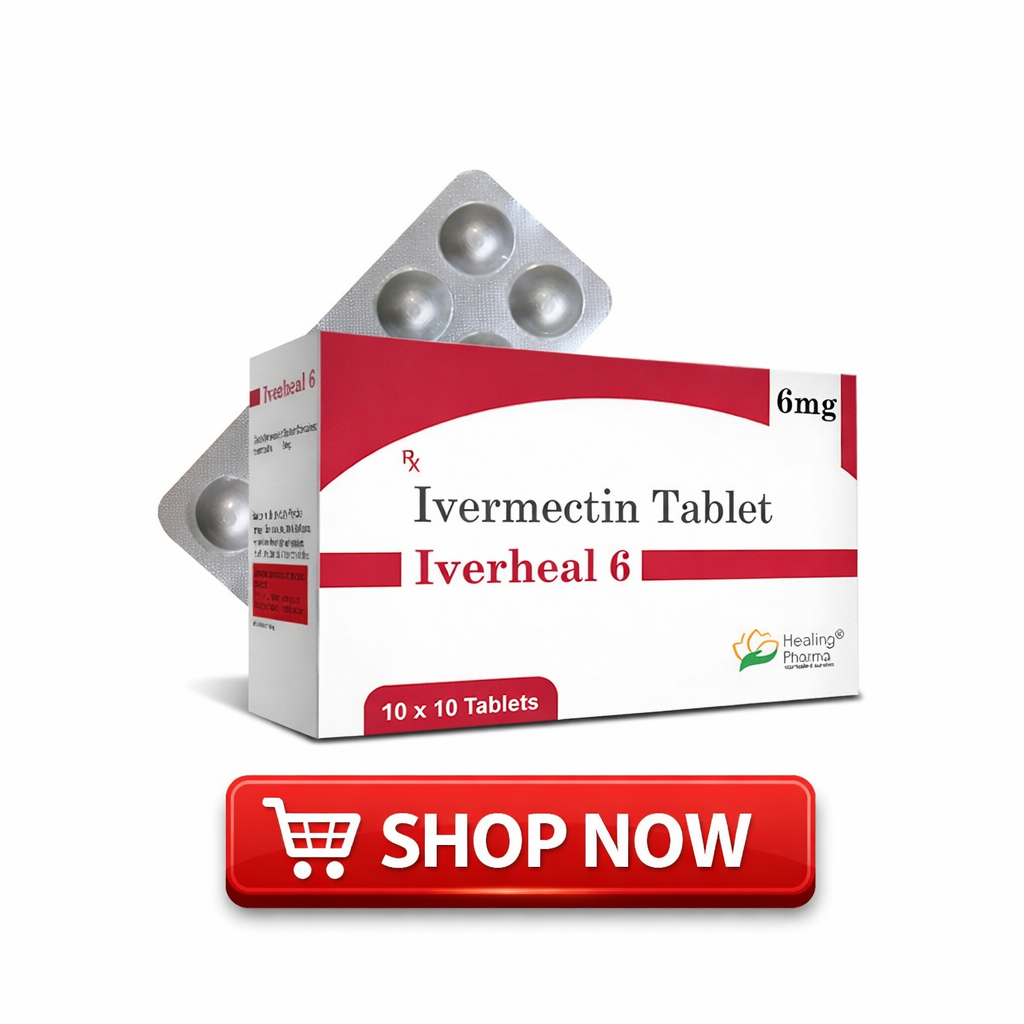
Iverheal 6 mg is a tablet containing ivermectin, an antiparasitic medicine used to treat certain infections caused by parasites. It works by affecting the nervous system of susceptible parasites, helping eliminate them from the body.
Ivermectin is a prescription medicine, and its suitability depends on the type of infection, the patient’s medical history, body weight, and other health considerations. This guide explains Iverheal 6 mg, its uses, mechanism of action, possible benefits, side effects, and important precautions.
1. What Is Iverheal 6 mg Ivermectin Medicine?
Product Overview
- Brand name: Iverheal 6
- Generic name: Ivermectin
- Strength: 6 mg
- Dosage form: Oral tablet
- Medicine category: Antiparasitic
- Manufacturer shown on product information: Healing Pharma India Pvt. Ltd.
- Availability: Prescription medicine
Iverheal 6 mg contains ivermectin as its active ingredient. It belongs to the avermectin group of antiparasitic medicines. These medicines are designed to target susceptible parasites rather than act as general-purpose treatments for every infection.
The 6 mg strength indicates the amount of ivermectin in each tablet. It does not mean that every patient should take one tablet. The correct dose must be determined by a healthcare professional.
2. What Is Iverheal 6 mg Used For?
Iverheal 6 mg may be prescribed for particular parasitic infections when ivermectin is considered an appropriate treatment.
Some established medical uses of oral ivermectin include:
A. Strongyloidiasis
Strongyloidiasis is an intestinal infection caused by the parasitic roundworm Strongyloides stercoralis. It can cause abdominal discomfort, diarrhoea, skin irritation, and other symptoms. Oral ivermectin is an established treatment for intestinal strongyloidiasis.
B. Onchocerciasis
Onchocerciasis, commonly called river blindness, is a parasitic infection caused by Onchocerca volvulus. It can affect the skin and eyes. Ivermectin helps reduce susceptible larval parasite stages and is used as part of medical management.
C. Certain Other Parasitic Conditions
Depending on the diagnosis and local medical guidelines, a healthcare professional may consider ivermectin for selected other parasitic conditions. Treatment suitability depends on the parasite involved and the patient’s individual circumstances.
Not every worm infection, skin condition, or itching problem responds to ivermectin. A proper diagnosis is essential before treatment.
3. How Does Iverheal 6 mg Work?
Iverheal 6 mg works by interfering with the normal nerve and muscle functions of susceptible parasites.
Its active ingredient, ivermectin, interacts with specific chloride channels in parasite nerve and muscle cells. This changes the movement of chloride ions across cell membranes, resulting in increased cellular inhibition.
This process can cause:
- Reduced movement of susceptible parasites.
- Paralysis of targeted parasites.
- Disruption of essential parasite functions.
- Elimination or reduction of susceptible parasites through the body’s natural processes.
Ivermectin has a selective action against certain parasites. However, it must be used only for infections that are known or suspected to respond to this medicine.
4. Potential Benefits of Iverheal 6 mg
When prescribed for an appropriate parasitic infection, Iverheal 6 mg may provide several treatment-related benefits.
Targeted antiparasitic action: Ivermectin acts against specific susceptible parasites and can help manage certain parasitic infections.
Established medical use: Oral ivermectin has recognised medical applications, including intestinal strongyloidiasis and onchocerciasis.
Convenient oral formulation: Iverheal 6 mg is supplied as a tablet, making it suitable for oral administration according to medical instructions.
Weight-based treatment options: Healthcare professionals can calculate an appropriate ivermectin dose according to body weight and the infection being treated.
Part of a complete treatment plan: Depending on the infection, treatment may include additional medical evaluation, follow-up testing, or other supportive measures.
It is important to understand that these are potential treatment benefits, not a guarantee of results. Effectiveness depends on the infection, correct diagnosis, and appropriate medical supervision.
5. Iverheal 6 mg Dosage and Administration
The dosage of Iverheal 6 mg should always be determined by a qualified healthcare professional.
Ivermectin dosing is not identical for every infection. It may depend on:
- The patient’s body weight.
- The type of parasitic infection.
- The severity of the condition.
- Medical history and existing health conditions.
- Other medicines being taken.
- Individual response to treatment.
Important administration guidance:
- Take the tablet exactly as prescribed.
- Follow the instructions provided by your doctor or pharmacist.
- Do not increase or repeat a dose without medical advice.
- Do not share your prescription medicine with another person.
- Ask your pharmacist whether the prescribed product should be taken with food or on an empty stomach.
- Complete the treatment plan recommended by your healthcare professional.
Do not assume that one 6 mg tablet is the correct dose for every adult. Taking too much ivermectin can cause serious adverse effects.
If you miss a dose, contact your healthcare professional for advice rather than doubling the next dose.
6. Possible Side Effects of Iverheal 6 mg
Like other medicines, Iverheal 6 mg may cause side effects in some individuals. The type and severity can vary depending on the dose, infection, and individual response.
Possible side effects include:
- Dizziness.
- Nausea.
- Vomiting.
- Diarrhoea.
- Stomach discomfort.
- Headache.
- Fatigue.
- Skin rash or itching.
Some symptoms may also be associated with the body’s response to dying parasites rather than the medicine alone.
Serious symptoms requiring immediate medical attention
Seek urgent medical assistance if you experience:
- Severe skin reactions or swelling of the face or throat.
- Difficulty breathing.
- Confusion or altered consciousness.
- Seizures.
- Severe dizziness or difficulty maintaining balance.
- Significant vision changes.
Do not ignore unusual or worsening symptoms after taking ivermectin.
7. Important Precautions Before Taking Iverheal 6 mg
Before starting Iverheal 6 mg, discuss your medical history with your doctor.
Pregnancy: If you are pregnant or planning pregnancy, consult your healthcare professional before using ivermectin. Treatment decisions require an assessment of potential benefits and risks.
Breastfeeding: Inform your doctor if you are breastfeeding. A healthcare professional should determine whether treatment is appropriate.
Children: Ivermectin dosing in children requires particular care and weight-based assessment. Do not administer it to children without professional guidance.
Liver conditions: Tell your doctor about any liver-related health problems or previous abnormal liver tests.
Older adults: Older patients may require additional assessment based on their health conditions and other medicines.
Allergies: Inform your doctor about previous allergic reactions to ivermectin or any tablet ingredients.
Existing infections: People with certain parasitic infections, particularly those involving Loa loa, may need special evaluation before treatment because serious neurological reactions can occur.
8. Drug Interactions and Medication Safety
Iverheal 6 mg may interact with other medicines. Before starting treatment, give your doctor a complete list of your current medications.
Mention:
- Prescription medicines.
- Over-the-counter medicines.
- Vitamins and supplements.
- Herbal preparations.
- Medicines for long-term medical conditions.
Ivermectin has been associated with increased anticoagulant effects in some patients taking warfarin. Your doctor may recommend appropriate monitoring if these medicines are used together.
Never stop or change another prescribed medicine without professional advice.
9. Storage Instructions for Iverheal 6 mg
Proper storage helps maintain medicine quality.
Follow the instructions printed on the original packaging. General precautions include:
- Store the tablets in their original packaging.
- Protect them from excessive heat and moisture.
- Keep them away from direct sunlight.
- Store them in a safe place out of children’s reach.
- Check the expiry date before use.
- Do not use tablets from damaged or improperly stored packaging.
The product packaging should be treated as the primary source for product-specific storage instructions.
10. Who Should Avoid Self-Medicating With Iverheal 6 mg?
Iverheal 6 mg is not suitable for unsupervised use.
People who should seek medical advice before taking it include:
- Pregnant or breastfeeding individuals.
- Children requiring weight-based dosing.
- People with significant liver problems.
- Individuals taking multiple prescription medicines.
- People with a history of allergic reactions to ivermectin.
- Patients with suspected infections requiring specialised treatment.
Also, ivermectin tablets intended for human use should not be replaced with veterinary ivermectin products. Animal formulations may have different concentrations and ingredients and can be dangerous to humans.
11. Is Iverheal 6 mg Effective for Every Parasitic Infection?
No. Ivermectin is effective against certain susceptible parasites, but it is not a universal antiparasitic medicine.
Different parasites require different medicines and treatment schedules. Some infections may need laboratory investigations, additional medicines, or specialist care.
Ivermectin should also not be considered an established treatment for COVID-19. It should only be used for recognised medical indications under appropriate professional supervision.
12. Frequently Asked Questions About Iverheal 6 mg
Q1. What is Iverheal 6 mg used for?
Iverheal 6 mg contains ivermectin, an antiparasitic medicine. It may be prescribed for certain parasitic infections, including conditions for which oral ivermectin is an established treatment.
Q2. What is the active ingredient in Iverheal 6 mg?
The active ingredient is ivermectin, with each tablet containing 6 mg of the medicine.
Q3. Is Iverheal 6 mg an antibiotic?
No. Iverheal 6 mg is an antiparasitic medicine, not an antibiotic. Antibiotics are primarily used to treat bacterial infections, whereas ivermectin targets certain parasites.
Q4. Can I take Iverheal 6 mg without a prescription?
You should not take ivermectin without medical advice. A healthcare professional must determine whether the medicine is appropriate for your infection and calculate the correct dose.
Q5. How long does Iverheal 6 mg take to work?
The response time depends on the infection, parasite type, and individual health factors. Follow-up testing may sometimes be needed to confirm treatment effectiveness.
Q6. What are the common side effects of Iverheal 6 mg?
Possible side effects include nausea, dizziness, vomiting, diarrhoea, headache, and stomach discomfort. Contact a healthcare professional if symptoms are severe or persistent.
Q7. Can I use Iverheal 6 mg for itching?
Itching can have many causes, including allergies, infections, and skin conditions. Ivermectin is appropriate only when the underlying condition is one that responds to it and a healthcare professional recommends treatment.
Q8. Can I take Iverheal 6 mg with other medicines?
Some medicines may interact with ivermectin. Inform your doctor about all prescription medicines, supplements, and over-the-counter products you use.
13. Conclusion
Iverheal 6 mg Ivermectin Medicine is an oral antiparasitic formulation intended for the treatment of certain parasitic infections when prescribed by a qualified healthcare professional. Its active ingredient, ivermectin, works by interfering with the nerve and muscle functions of susceptible parasites.
Understanding its medical uses, dosage considerations, potential side effects, and safety precautions can help patients make informed decisions about treatment.
However, the correct dosage and suitability depend on the patient’s body weight, diagnosis, medical history, and other medications. Always consult a healthcare professional before starting Iverheal 6 mg, and never use it as a substitute for proper diagnosis or medical care.