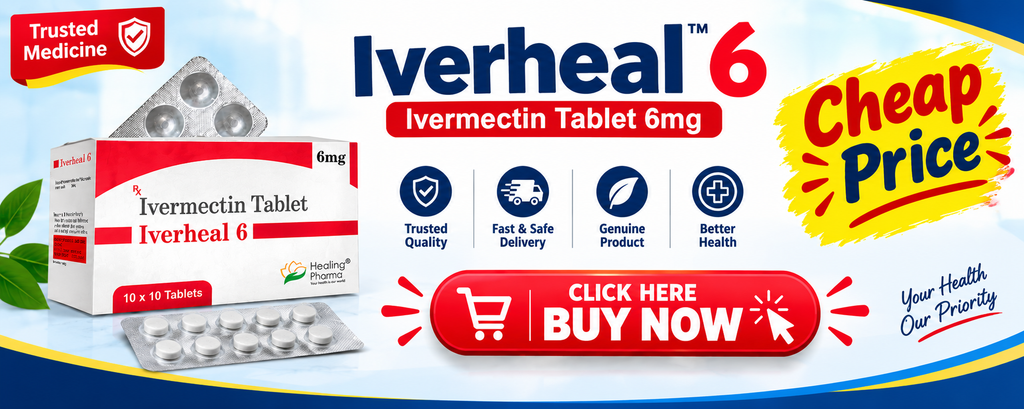
What Is Iverheal 6 mg Tablet?
Iverheal 6 mg is a tablet marketed as an ivermectin-containing medicine. Ivermectin belongs to a group of medicines known as antiparasitic agents.
Antiparasitic medicines help eliminate or control certain parasites that can cause infections in humans. Ivermectin works by interfering with nerve and muscle functions in susceptible parasites, leading to their paralysis and death.
The 6 mg strength refers to the amount of ivermectin stated for the tablet, provided the product label confirms this composition.
Iverheal should not be confused with medicines containing different active ingredients or with veterinary ivermectin products. Always verify the ingredients, strength, and intended use on the packaging.
Iverheal 6 mg Tablet Uses
Ivermectin has established medical uses for particular parasitic infections. Whether Iverheal is appropriate depends on the diagnosis, the patient’s circumstances, and the locally approved product information.
1. Treatment of Certain Worm Infections
Oral ivermectin is used to treat intestinal strongyloidiasis, an infection caused by the parasitic roundworm Strongyloides stercoralis.
This infection may cause abdominal discomfort, diarrhoea, skin symptoms, or other problems, although some people have few noticeable symptoms.
A healthcare professional can determine whether ivermectin is appropriate and whether follow-up testing is needed to confirm that the infection has cleared.
2. Treatment of Certain Other Parasitic Infections
Ivermectin is also an established treatment for onchocerciasis, a parasitic disease caused by Onchocerca volvulus. This infection is primarily associated with specific regions where the parasite is transmitted by blackflies.
Treatment requires appropriate medical assessment and may involve follow-up or repeat treatment.
This does not mean that Iverheal 6 mg should be used routinely for every type of intestinal worm. Different parasites may require different medicines.
3. Certain Skin Conditions When Prescribed
Ivermectin may be used in the treatment of selected parasitic skin conditions, including scabies, under appropriate clinical guidance. The treatment plan depends on the type of infection and the applicable medical recommendations.
Oral ivermectin is not interchangeable with topical ivermectin creams or lotions. The route of administration and formulation matter.
Itching alone does not establish a parasitic infection. Eczema, allergic reactions, fungal infections, and other skin conditions can produce similar symptoms.
4. Other Uses Determined by a Doctor
Healthcare professionals may prescribe ivermectin for certain additional conditions in specific circumstances, depending on the evidence and local treatment guidance.
However, not every proposed use is supported by strong clinical evidence. Ivermectin should not be taken for viral infections, including COVID-19, unless a separate, evidence-based indication and appropriate medical guidance apply. It is not an established general-purpose antiviral medicine.
How Does Iverheal 6 mg Work?
Ivermectin acts on particular channels in the nerve and muscle cells of susceptible parasites. These effects disrupt normal nerve signalling and can cause paralysis and death of the parasite.
The medicine’s action depends on the biology of the parasite being treated. It does not work against every organism that causes disease.
Ivermectin also does not automatically eliminate every stage of every parasite’s life cycle. Some infections require repeat treatment, additional medication, or follow-up investigations.
For this reason, a doctor should select the treatment according to the confirmed or suspected infection rather than simply the presence of itching or digestive symptoms.
Iverheal 6 mg Tablet Dosage
The appropriate ivermectin dose depends on several factors, including body weight, the infection being treated, medical history, and the product’s approved instructions.
There is no single dosage schedule suitable for everyone. The number of tablets and whether a dose needs to be repeated must be determined by a qualified healthcare professional.
Before taking Iverheal 6 mg, consider the following points:
- Follow the prescribed dose and timing.
- Do not take additional tablets because symptoms have not improved immediately.
- Do not repeat treatment without medical advice.
- Ask your doctor or pharmacist whether the medicine should be taken with food or on an empty stomach, following the instructions for your specific product and indication.
- If you miss a dose, seek advice about what to do rather than doubling the next dose.
The dosing instructions for one ivermectin product or infection should not automatically be applied to another. Children require particular care, and dosing must not be estimated from adult instructions.
Possible Side Effects of Iverheal 6 mg
Like other medicines, ivermectin may cause side effects. Their likelihood and severity can depend on the patient, the infection, and the treatment regimen.
Possible side effects include:
- Nausea
- Diarrhoea
- Abdominal discomfort
- Dizziness
- Fatigue
- Itching or skin rash
- Vomiting in some patients
Some symptoms may also occur as part of the body’s response to dying parasites, depending on the infection being treated.
Serious Side Effects
Seek urgent medical attention if you experience symptoms such as:
- Difficulty breathing or swelling of the face, lips, or tongue
- Severe confusion or altered consciousness
- Seizures
- Difficulty standing or walking
- Significant visual changes
- Severe or rapidly worsening symptoms
Serious neurological reactions have been reported with ivermectin. These are uncommon, but warning signs should never be ignored.
Do not assume that every symptom following treatment is harmless or that taking another dose will resolve it.
Precautions Before Taking Iverheal 6 mg
Pregnancy and Breastfeeding
Tell your healthcare professional if you are pregnant, planning pregnancy, or breastfeeding. The potential benefits and risks should be assessed before treatment.
Do not self-medicate during pregnancy or while breastfeeding.
Liver Problems
Tell your doctor about any liver disease or previous abnormal liver tests. Your medical history can affect the assessment of treatment risks and monitoring needs.
Allergies
Do not take the medicine if you have a known allergy to ivermectin or any ingredient in the product. Seek medical advice if you develop an allergic reaction after taking it.
Existing Medical Conditions
Inform your doctor about immune-system problems, other significant illnesses, and any previous reactions to antiparasitic medicines.
Some parasitic infections can cause serious complications in people with weakened immune systems, so treatment may require additional monitoring.
Children and Older Adults
Children should receive ivermectin only when a healthcare professional determines that it is appropriate for their age, weight, and condition.
Older adults may have other illnesses or take medicines that need to be considered before treatment.
Drug Interactions
Iverheal 6 mg may interact with other medicines. Tell your doctor or pharmacist about all prescription medicines, non-prescription products, vitamins, and herbal supplements you use.
Particular attention may be needed if you take warfarin, an anticoagulant, because increases in the INR have been reported when it is used with ivermectin.
Do not stop prescribed medicines or change their doses without medical advice.
Your healthcare professional can determine whether any medicines you take require additional monitoring or adjustments.
What Should You Avoid While Taking Iverheal 6 mg?
For safer treatment, follow these recommendations:
- Avoid taking more than the prescribed amount.
- Do not use veterinary ivermectin products in place of human medicines.
- Do not share tablets with another person, even if their symptoms seem similar.
- Do not combine antiparasitic medicines without professional advice.
- Avoid driving or operating machinery if you feel dizzy, sleepy, or otherwise impaired.
- Seek medical advice if symptoms worsen or fail to improve within the timeframe specified by your clinician.
These precautions help reduce preventable medication errors and delays in appropriate treatment.
How to Store Iverheal 6 mg Tablet
Store the medicine according to the instructions printed on its packaging. Keep it in its original packaging where possible, away from excessive heat, moisture, and direct sunlight.
Keep all medicines out of the reach of children and pets.
Do not use tablets that have expired or show signs of damage, contamination, or deterioration. Ask a pharmacist how to dispose of unwanted medicine safely.
Frequently Asked Questions (FAQs)
1. What is Iverheal 6 mg tablet used for?
Iverheal 6 mg is marketed as an ivermectin-based medicine. Ivermectin is used to treat certain parasitic infections, including intestinal strongyloidiasis and onchocerciasis. Other uses depend on the diagnosis and applicable medical guidance.
2. Is Iverheal 6 mg an antibiotic?
No. Ivermectin is an antiparasitic medicine, not a conventional antibiotic used to treat bacterial infections.
3. Can I take Iverheal 6 mg for itching?
Not without determining the cause. Itching can result from scabies, allergies, eczema, fungal infections, and many other conditions. A healthcare professional can identify the likely cause and recommend suitable treatment.
4. How quickly does Iverheal 6 mg work?
The time needed for improvement depends on the infection, its severity, and the treatment regimen. Symptoms may not disappear immediately after taking a medicine. Follow your clinician’s instructions and attend any recommended follow-up appointments.
5. Can I take Iverheal 6 mg every day?
Do not take it daily unless a qualified healthcare professional has specifically prescribed that schedule. Many ivermectin regimens use a defined dose rather than unrestricted daily use.
6. Can I take Iverheal 6 mg without a prescription?
It is safest to use ivermectin under professional medical guidance. Local dispensing rules may differ, but self-treatment can lead to incorrect dosing, adverse effects, or failure to treat the actual condition.
7. What should I do if I experience side effects?
Contact your healthcare professional if side effects are persistent or troublesome. Seek emergency care for difficulty breathing, severe confusion, seizures, or other serious symptoms.
8. Is Iverheal 6 mg suitable for everyone?
No. Suitability depends on the infection, body weight, age, pregnancy or breastfeeding status, allergies, medical history, and other medicines being taken.
9. Can I use Iverheal 6 mg to prevent any parasitic infection?
Do not use ivermectin as a general preventive medicine without a specific medical recommendation. Preventive treatment programmes have defined eligibility criteria and dosing protocols.
10. Does Iverheal 6 mg treat every type of worm?
No. Different parasites respond to different medicines. Diagnosis and appropriate treatment selection are important for effective care.
Conclusion
Iverheal 6 mg tablet is marketed as an ivermectin-containing medicine used in the management of certain parasitic infections. Ivermectin has established medical applications, but its suitability depends on the infection being treated and the patient’s individual circumstances.
Correct dosing, awareness of possible side effects, consideration of drug interactions, and appropriate follow-up are important parts of safe treatment. Do not take Iverheal 6 mg simply because you have itching, digestive symptoms, or a suspected parasitic infection.
Medical disclaimer: This article is intended for general educational purposes and does not replace professional medical advice, diagnosis, or treatment. Verify the product composition and consult a qualified healthcare professional before using Iverheal 6 mg.